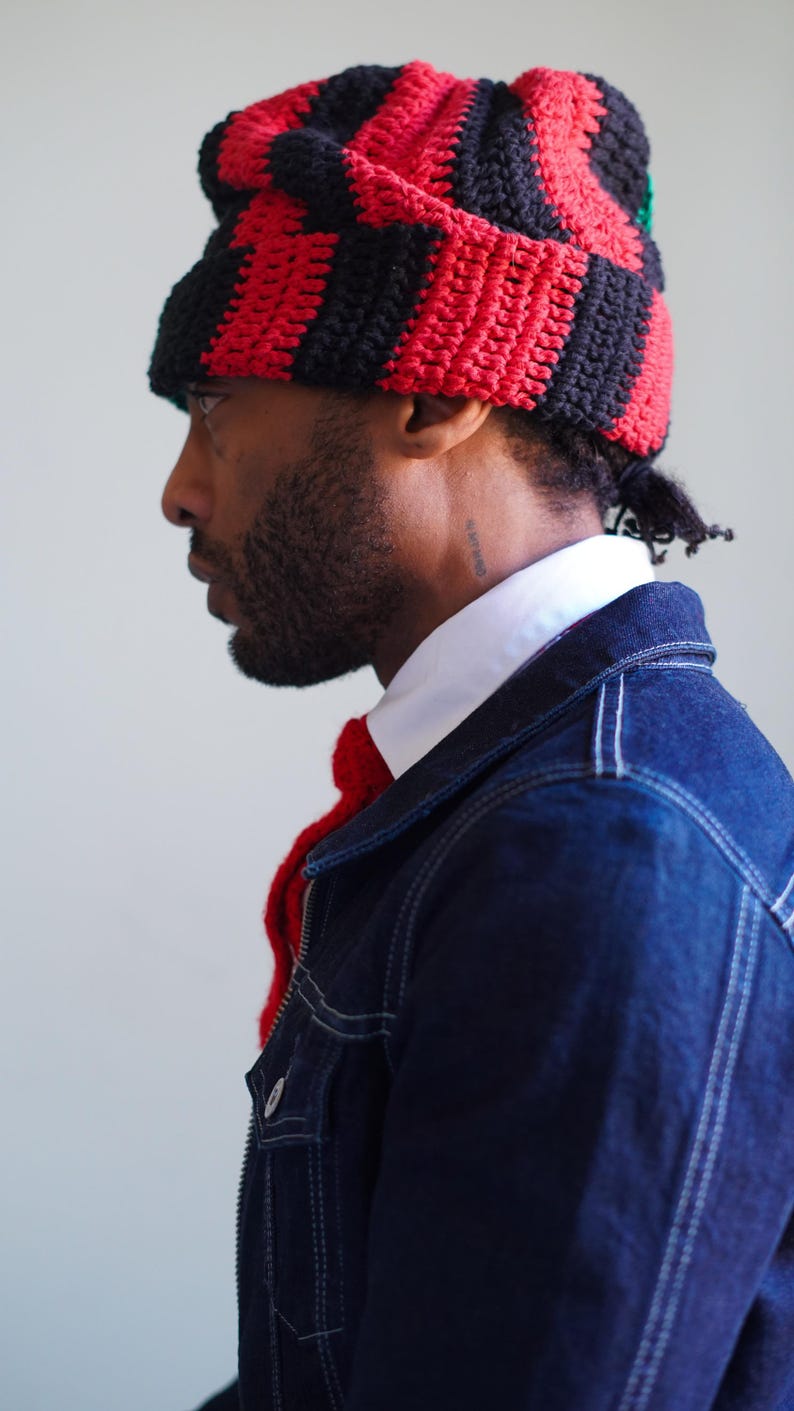
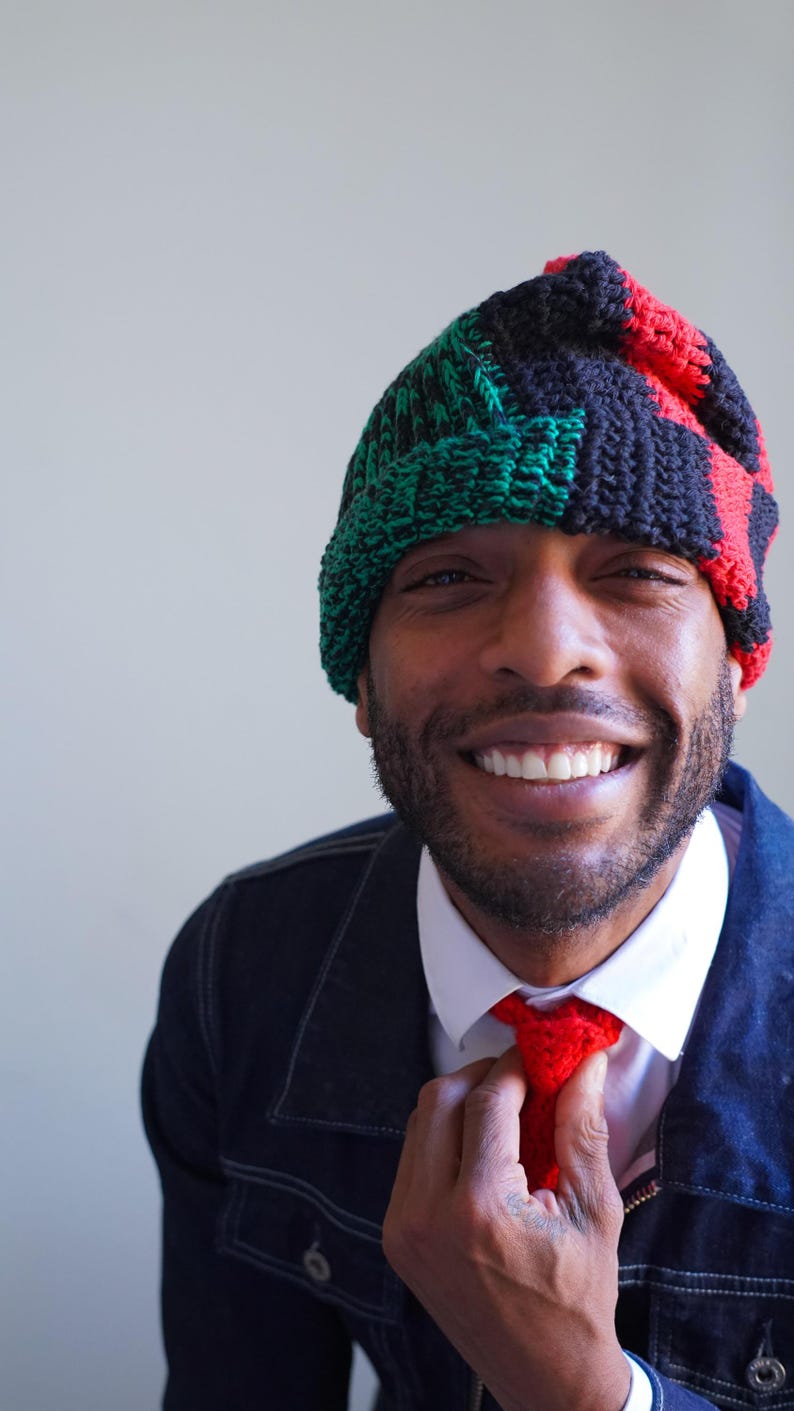
Material study / Cotton & wool blend
A flag, in another form.
David Hammons, Pan-African color and the history carried by a familiar fiber.
WITH
BYRON

Made by hand. Worn your way.
Ribbed cotton, wool blends and acrylic. Distinctive hats and finishing touches, designed and hand-crocheted by Byron Linnell Edwards.
Shop the collection ↗Material study / Dollar Tree yarn
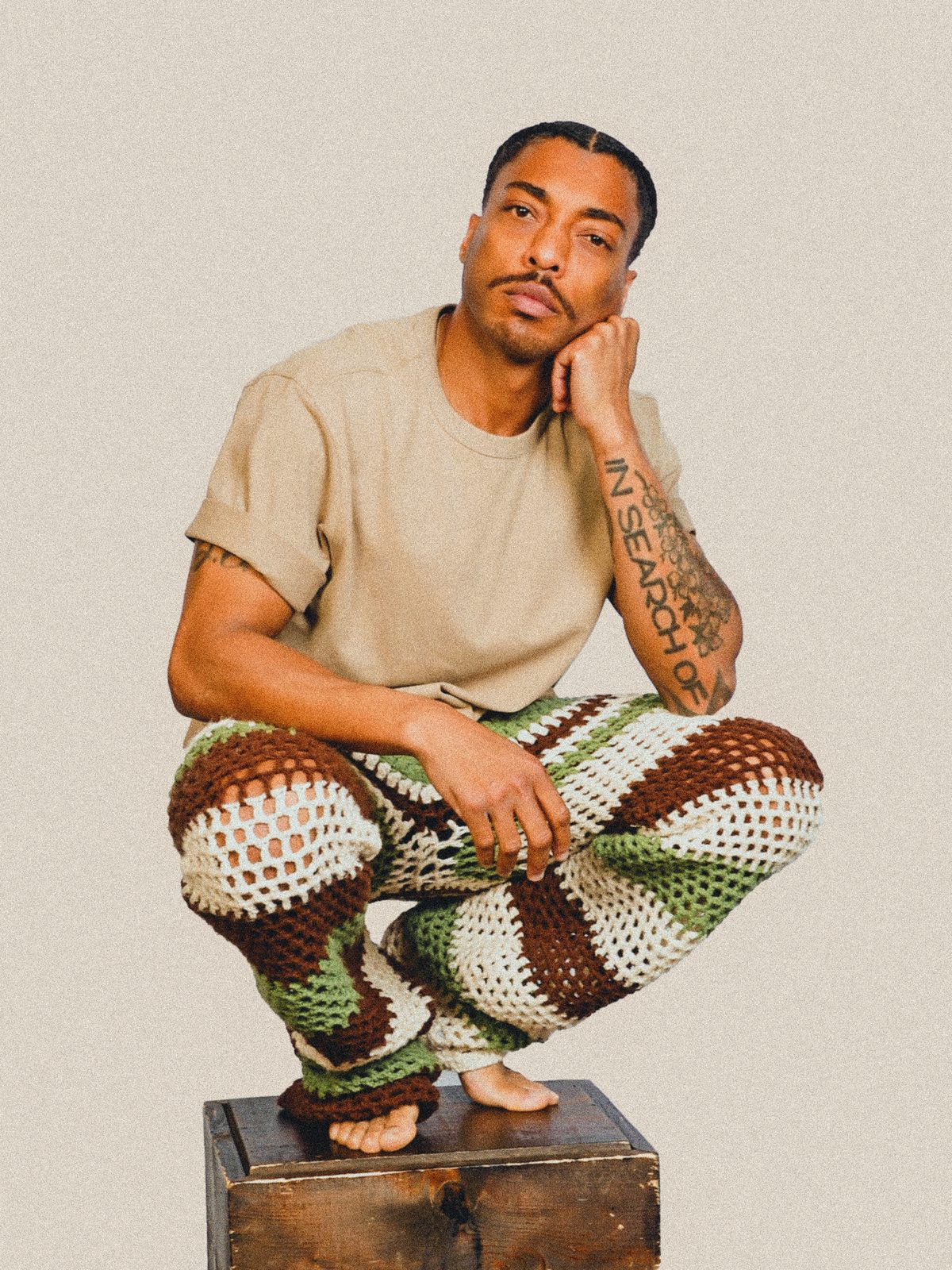
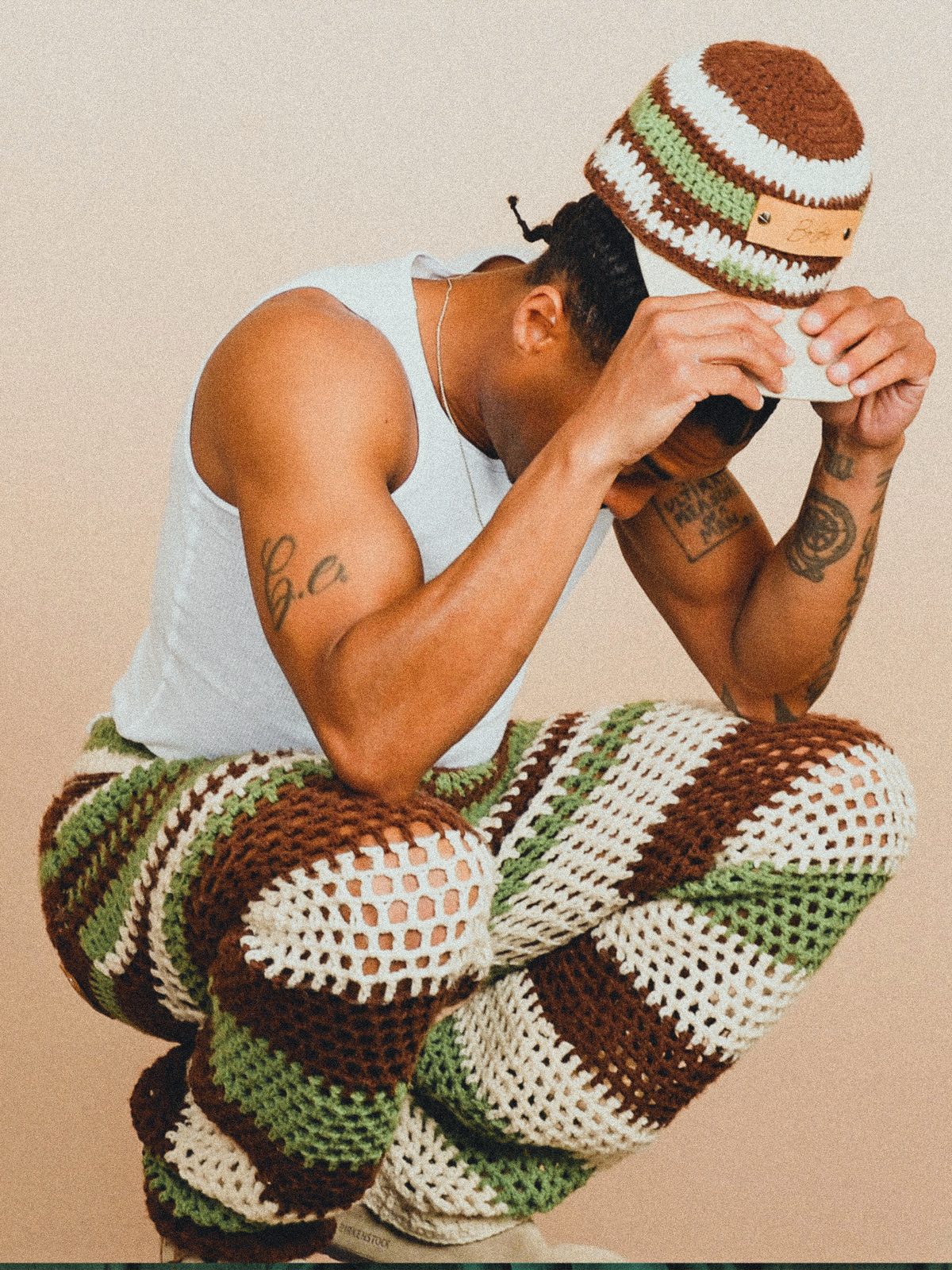
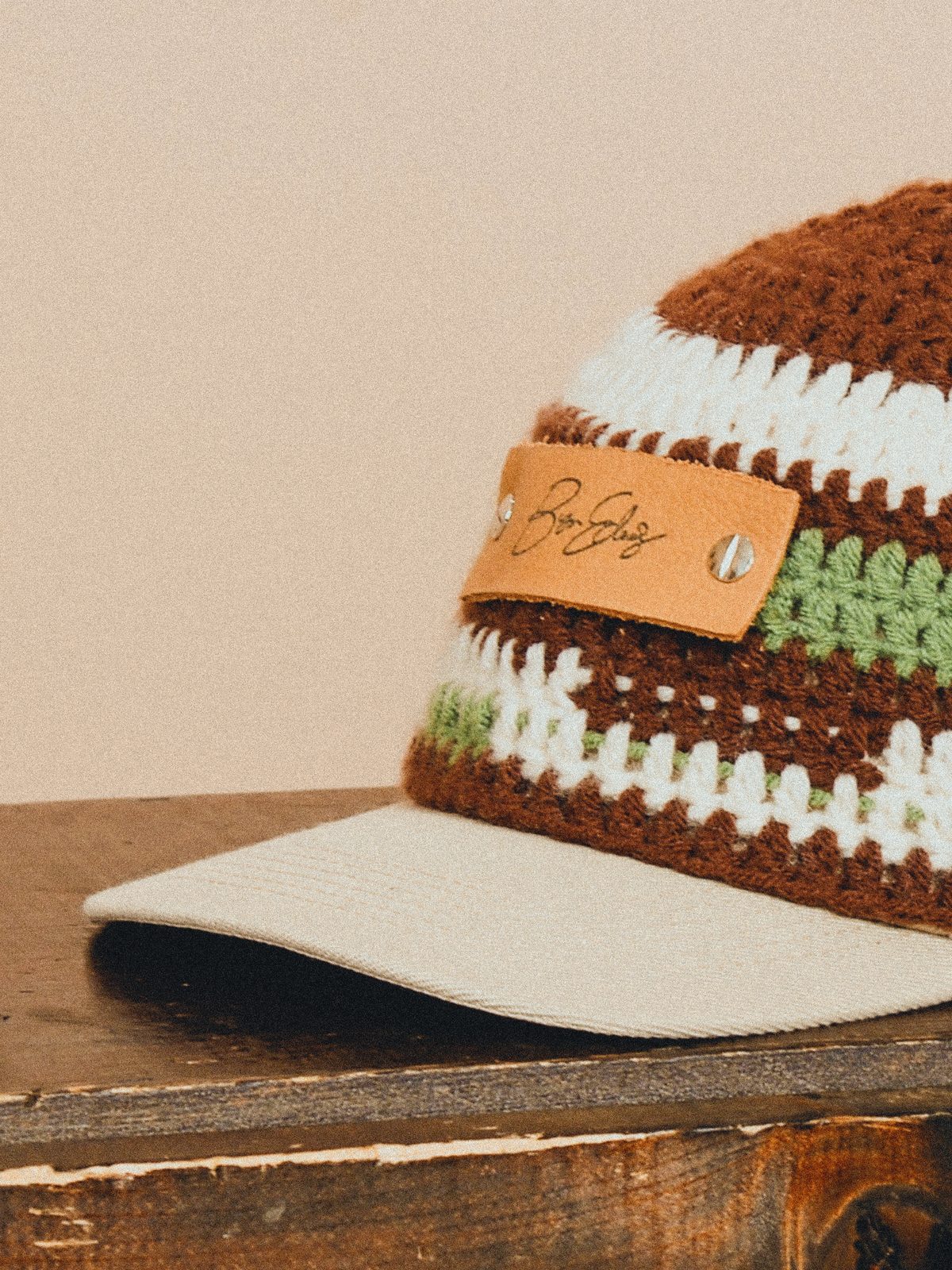
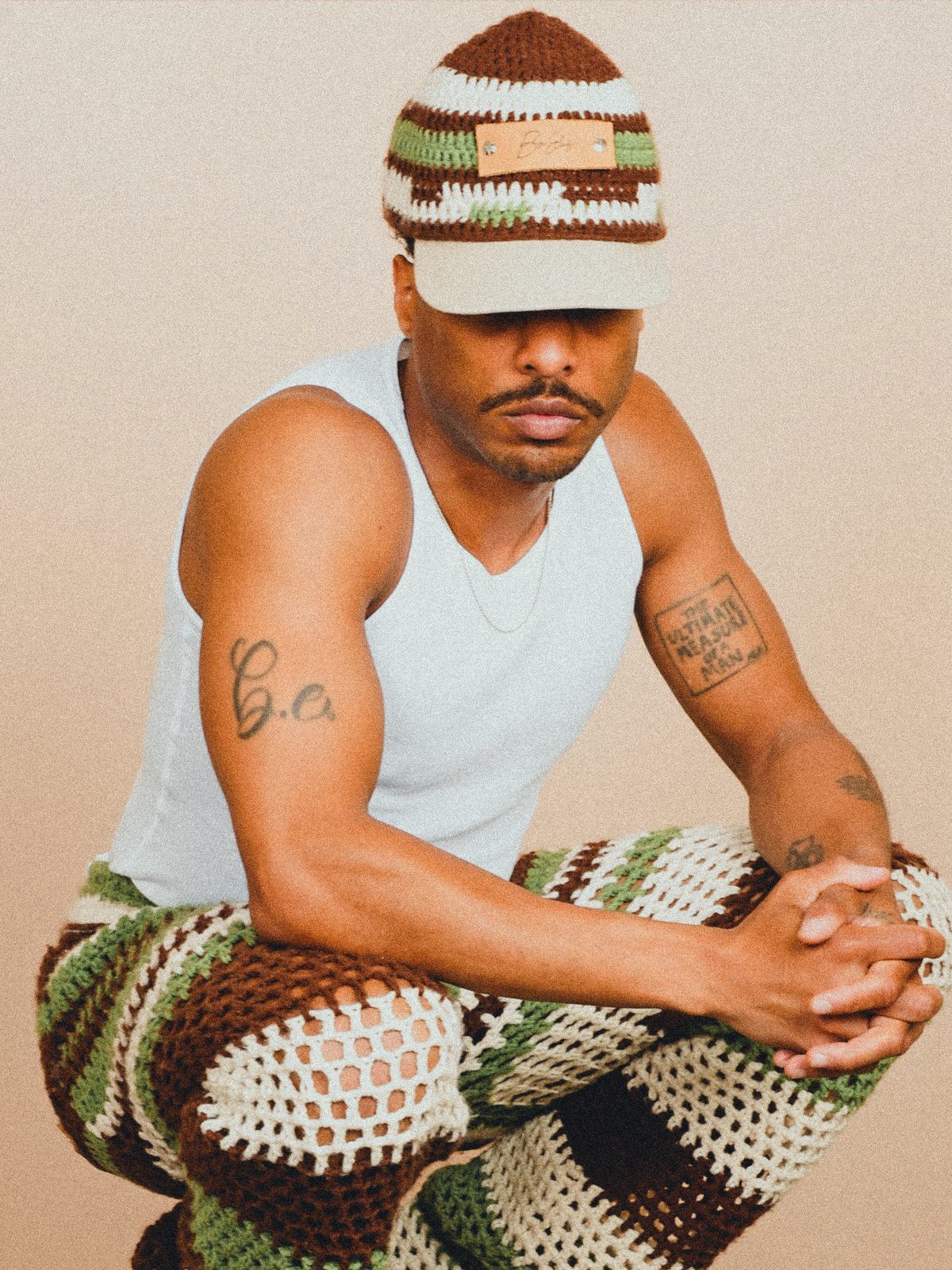
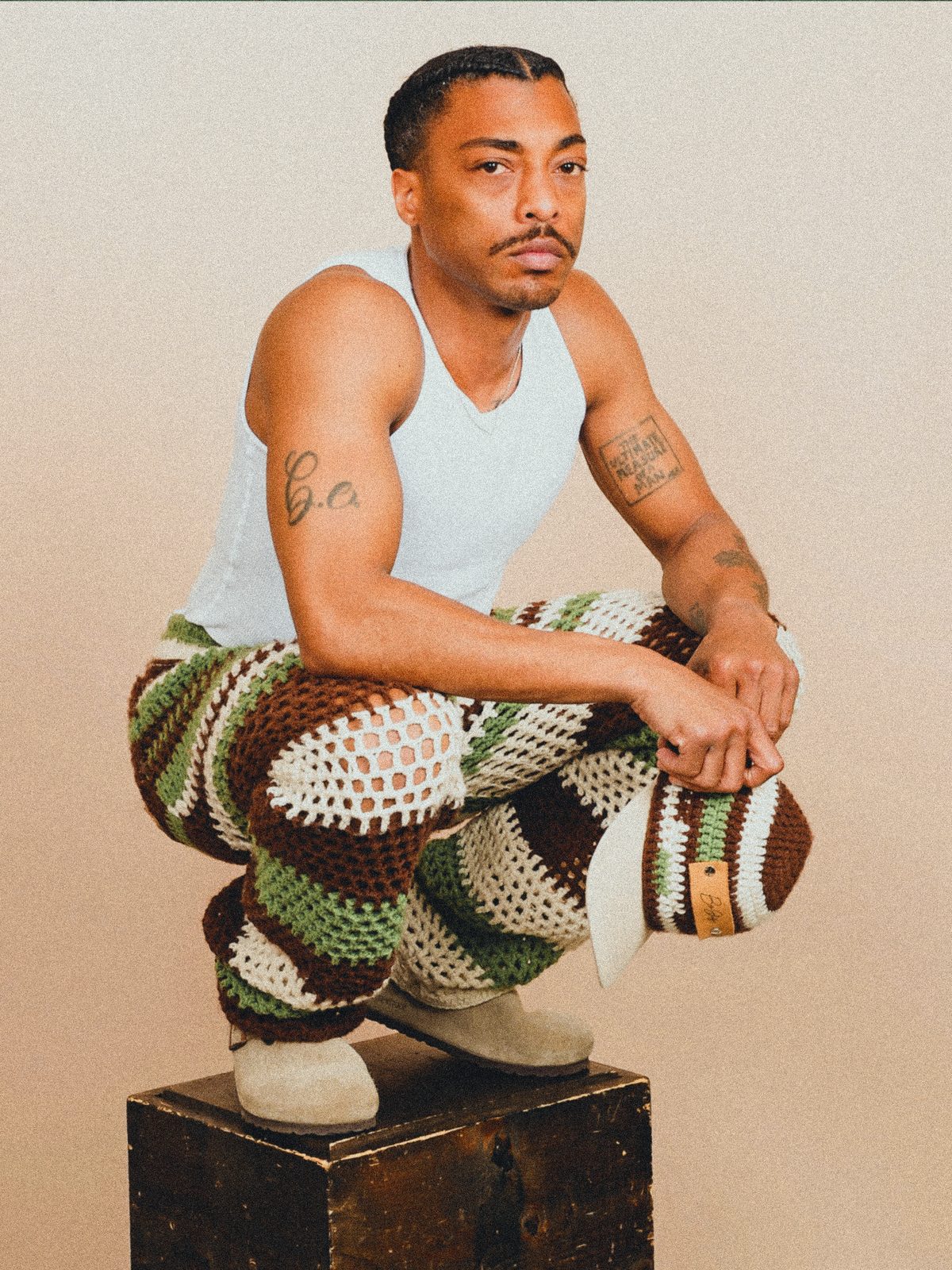
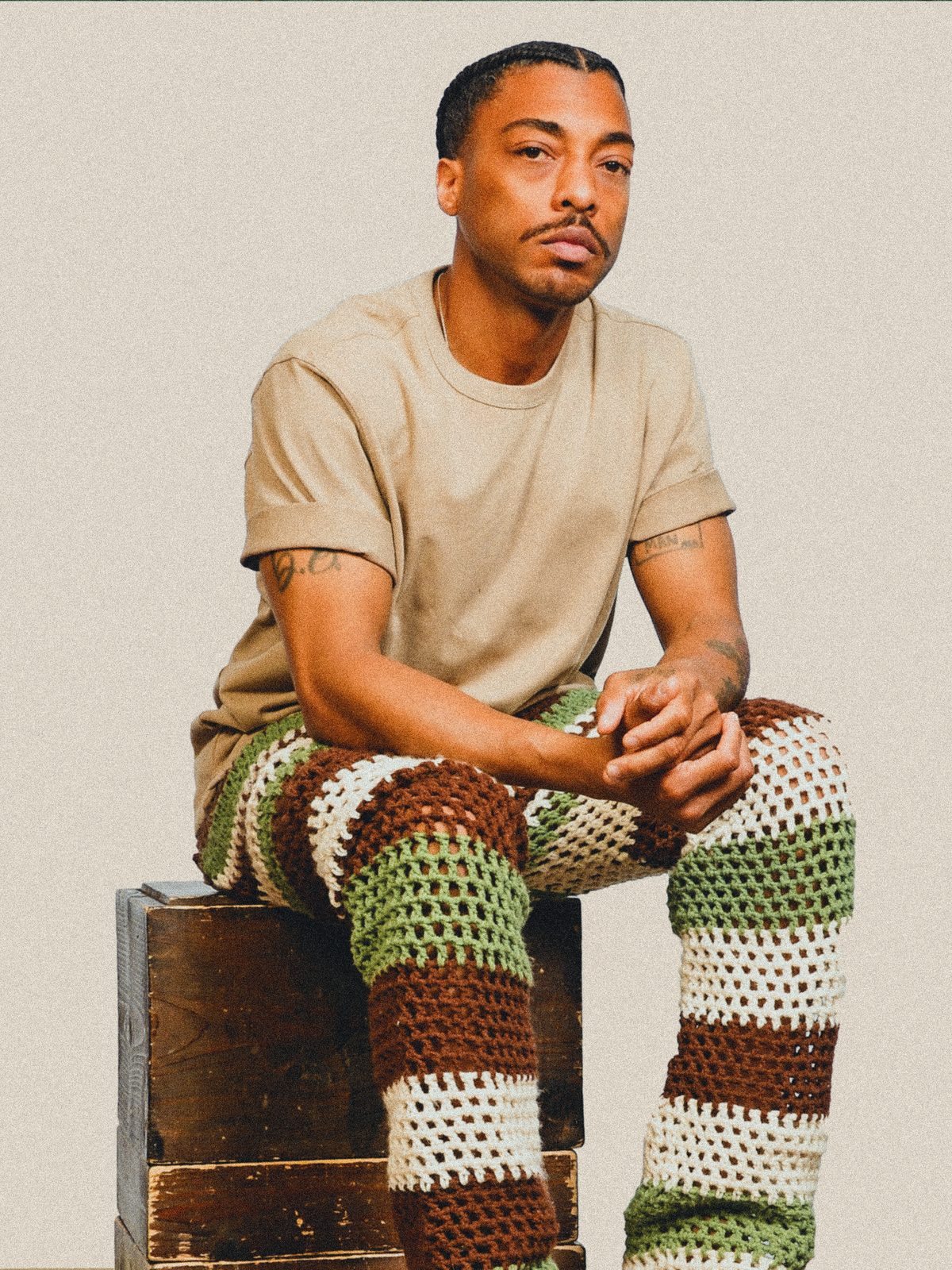
Brown, green and cream. A pair of crochet pants. A cap.
I made this set with Dollar Tree yarn. The finished pants and cap bring the same colors into two different shapes: an open stitch in the pants, a closer stitch in the cap.
The fit, the texture, the way the colors sit together, and how I choose to wear it all become part of the piece.
The films. The unfinished pieces. The conversations that happen along the way.
Latest film / A week in crochet
A birthday week, finished pieces, new projects and an honest check-in. Bring your current project and spend a little time with me.
Watch on YouTube ↗The journal
Materials, making, style and the life around the work.

Material study / Cotton & wool blend
David Hammons, Pan-African color and the history carried by a familiar fiber.
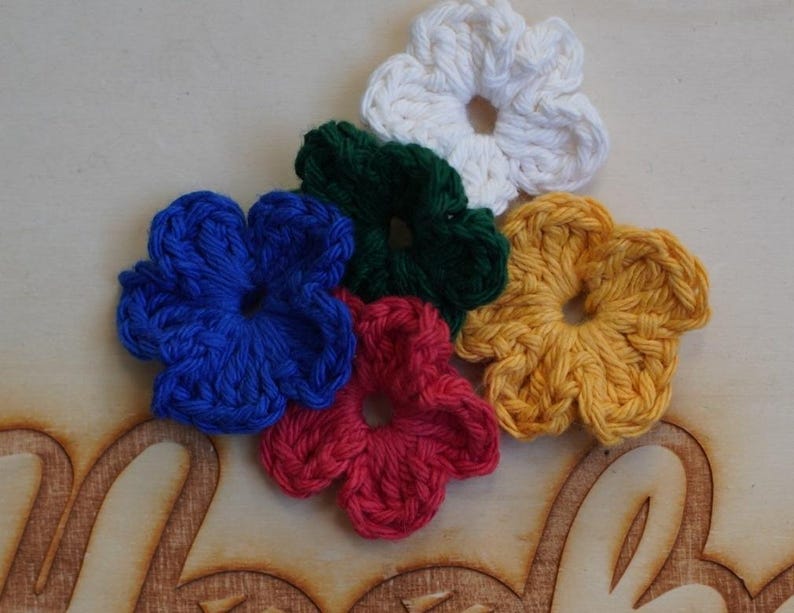
Styling notes / Cotton flowers
Five cotton flowers, and the clothes you already have.
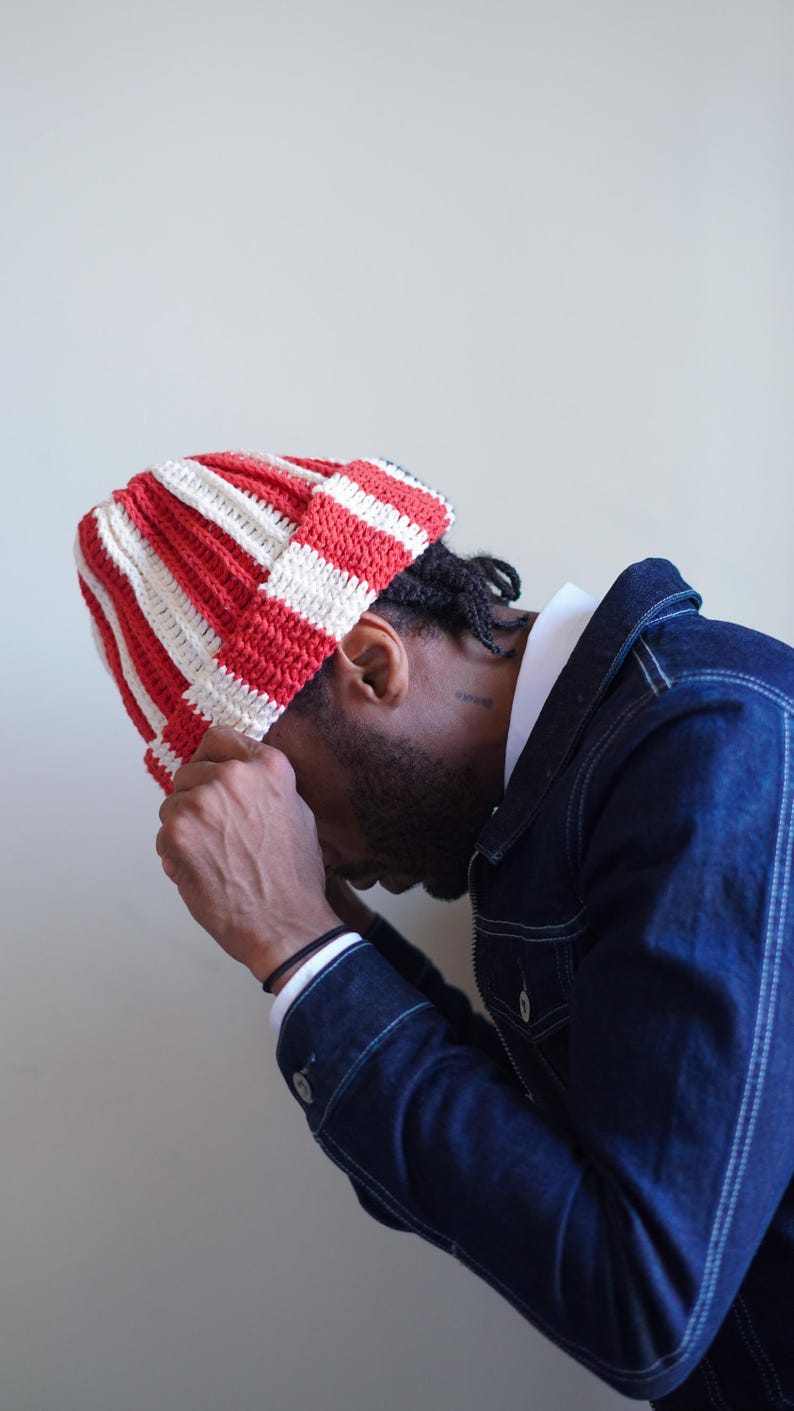
Making / The Perfect Hat
A collection to try on, two textures, and the shape and fit I want to wear.

Scrap Yarn / Home
Brown-and-yellow yarn, an inherited couch and a night in my New York apartment.

Wearables / Process
Blue Dollar Tree yarn, a change of direction and a vest I wanted to wear outside.

Thread Talk / Travel
Leftover yarn comes to DC. What it becomes is still open.

Live replay / November 5
Cardigans, coordinating hats, yarn and a little company while you work.

Live replay / November 3
An afternoon of making, conversation and time for yourself.

Hooked Hacks / Technique
A small technical companion to the larger blue-yarn project.
Made to order in your colors. Browse the collection with a swipe or the arrows.
Seven pieces to make your own

$160
Two ribbed textures. Your choice of two cotton colors and one wool-blend color.
Choose & order ↗
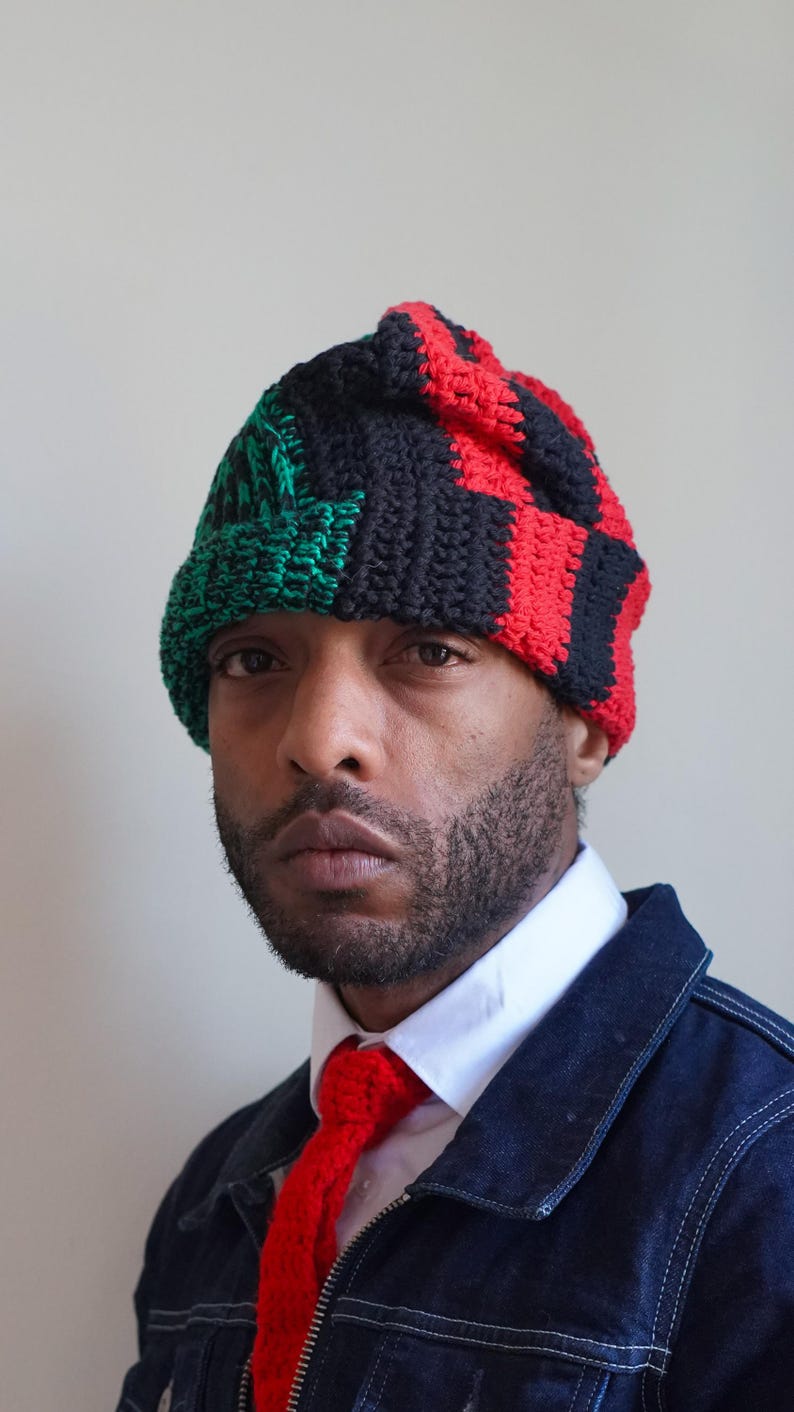
$200
Red, black and green in cotton and wool-blend yarn. A material study in color, texture and history.
Choose & order ↗
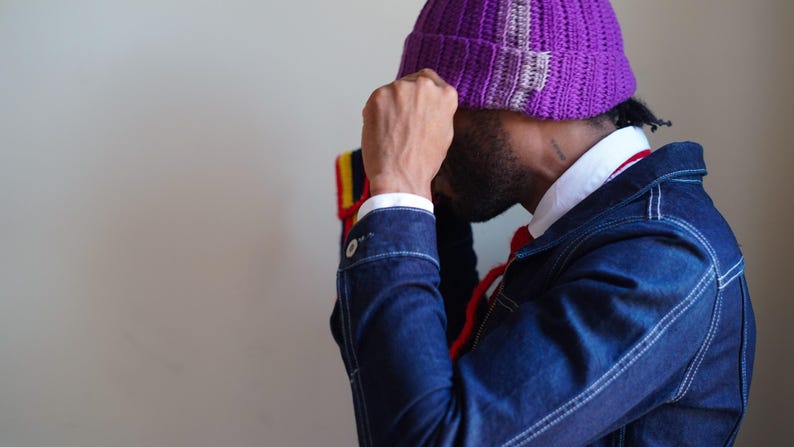
$160
Purple, white and charcoal, or three cotton colors chosen by you.
Choose & order ↗
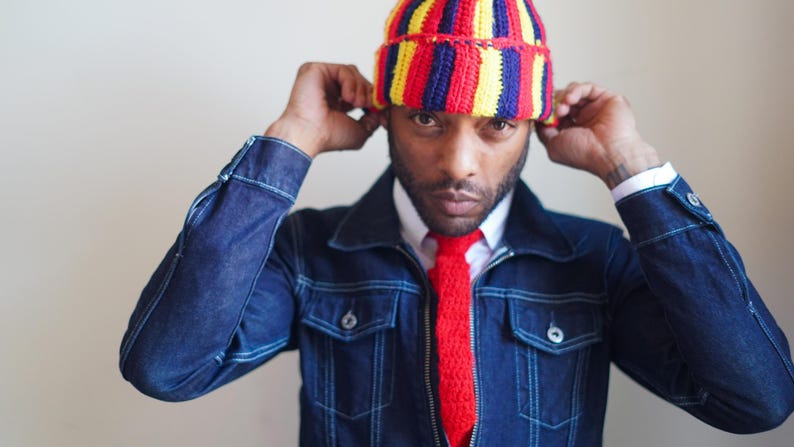
$85
A simple ribbed shape. Choose a solid color or your striped combination.
Choose & order ↗
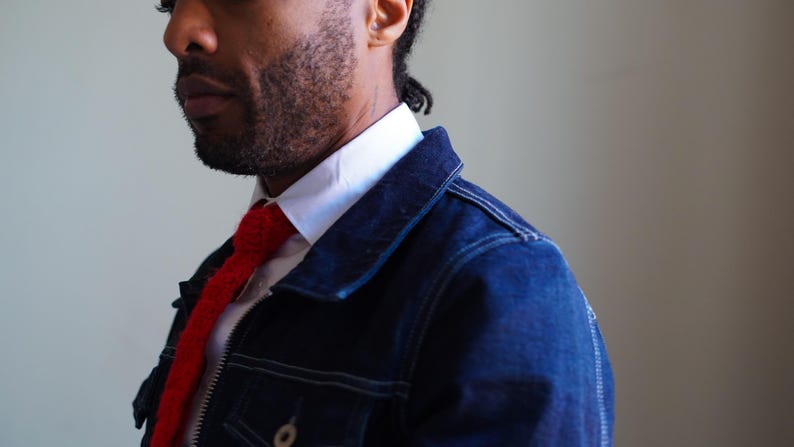
$65
Hand-crocheted acrylic. Red, blue, yellow, or a solid color of your choice.
Choose & order ↗
$135
One acrylic ribbed beanie and one acrylic tie, in your chosen colors.
Choose & order ↗
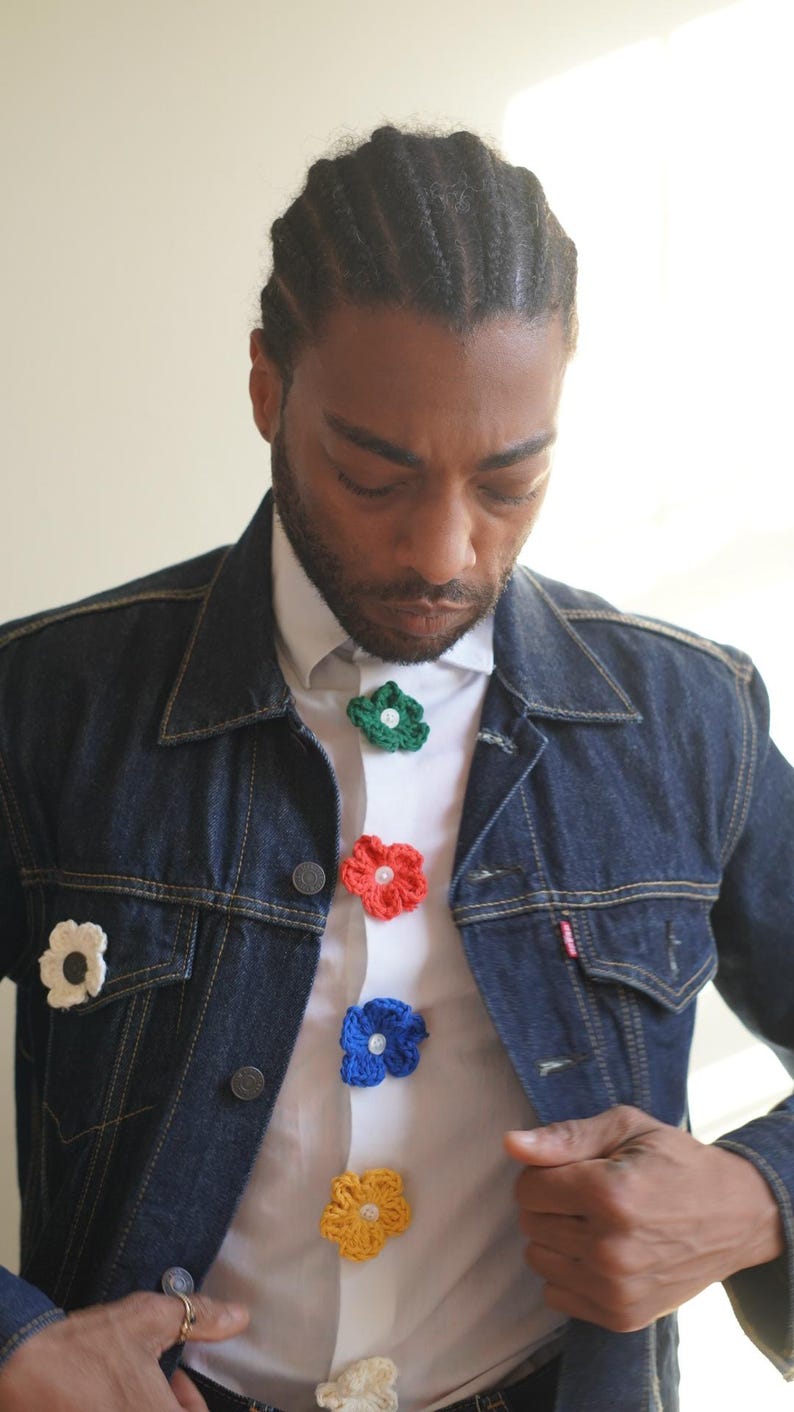
$40 / set of five
Choose five solid colors or the Crayon pack. A small detail that changes the whole look.
Choose & order ↗U.S. shipping included. Made-to-order items are made within one week, plus transit. Approximate adult hat fit: 22 inches. Clothing shown is not included. Applicable tax calculated at checkout. Exchanges within 30 days; buyer pays return postage.
Work with Byron
I bring crochet into clothes, home, travel and conversation. For brands, that can mean a project film, a material story, a finished look, or a collaboration built around making something worth spending time with.
YouTube / Oct 19–Nov 15, 2026
Channel-wide snapshot, checked Nov 16.
Read the brand case study ↗The artist behind the work
I’m an artist, creative strategist and maker. Hooked With Byron is where I share the things I crochet, how I wear them, and what I’m thinking about while they come together.
THE
JOURNAL
Films, live replays, techniques and the work after it leaves the hook. Related Shorts stay with their project.
Latest film / November 2026
A birthday week, the projects, and an honest check-in.
Read & watch ↗Material study / Cotton & wool blend
David Hammons, Pan-African color, and the history carried by a familiar fiber.
Read & watch ↗Styling notes / Cotton flowers
Five hand-crocheted button covers, worn your way.
Read & watch ↗Live replay / November 5
Cardigans, coordinating hats, yarn and a little company while you work.
Read & watch ↗Live replay / November 3
An afternoon of making and conversation.
Read & watch ↗New / November 1, 2026
A day of crochet, a collection to try on, and the shape and fit I want to wear.
Read & watch ↗Home / Dollar Tree yarn
An inherited couch, brown-and-yellow yarn, and a night in my New York apartment.
Read & watch ↗Wearables / Dollar Tree yarn
Blue Dollar Tree yarn, a change of direction, and a vest I wanted to wear outside.
Read & watch ↗Technique / Granny square
A small technical companion to the larger blue-yarn project.
Read & watch ↗Field notes / Summer shorts
The project comes along. So do the tangles and questions about the fit.
Read & watch ↗Thread Talk / Creative life
A hat takes shape while the conversation opens up.
Read & watch ↗Wearables / Process
Granny squares, a homemade yarn holder, and shorts with a functioning pocket.
Read & watch ↗Hooked Hacks / Technique
A slip knot, a starting chain, and a change of color.
Read & watch ↗Archive / Object study
A freestyle fiber experiment from the Hooked Hacks archive.
Read & watch ↗Thread Talk / Episode 1
The first Thread Talk starts with a sweater, a response, and the decision to begin filming.
Read & watch ↗Live replay / Blue yarn
An early replay: panels, fit decisions, and crochet taken on the road.
Read & watch ↗Travel / Thread Talk
Leftover yarn comes to DC. What it becomes is still open.
Read & watch ↗Style / From the archive
Four words on Threads. A much larger conversation.
Read & watch ↗Photography / Dollar Tree yarn
The brown, green and cream pants and cap, made and worn by Byron.
See the photo story ↗MATERIAL
STUDIES
01 / Dollar Tree yarn
Brown, green and cream. A pair of crochet pants. A cap. The material is where the story starts.

I made this set with Dollar Tree yarn. The finished pants and cap bring the same colors into two different shapes: an open stitch in the pants, a closer stitch in the cap.
The photographs are a way to look at the work after it leaves the hook. The fit, the texture, the way the colors sit together, and how I choose to wear it all become part of the piece.
I’m interested in what I can do with a material once it is in my hands. The yarn is accessible. The choices are personal.


Three Dollar Tree yarn stories: this photographed set, the couch blanket, and the blue sweater vest.
The next film I’m working toward takes a closer look at the yarn behind this project. Until then, there is another Dollar Tree yarn story to watch: the brown-and-yellow blanket I made for my couch.
Watch the blanket film ↗Finished crochet pants and cap. Yarn purchased from Dollar Tree, as documented by Byron. This is a photographic project story; a written pattern is not currently offered on this page.
THE
JOURNAL
Home / Dollar Tree yarn
An inherited couch, brown-and-yellow yarn, and a night in my New York apartment.
I had a couch to make my own. I had brown and yellow yarn from Dollar Tree. And I had somewhere else I was supposed to be. The blanket film takes place in the space between those three things: settling back into New York, making something for the apartment, and deciding whether I had the energy to go out.
The work is practical. There are color decisions, a border to work out, and a corner that needs attention. Running out of yellow partway through a row becomes another problem to solve with what is already here. A blanket is a large object made through small decisions, repeated until it begins to look inevitable.
There is also the evening happening around it. I consider the art show. I consider a nap. I keep crocheting. That tension is part of the film: making can feel productive, comforting, absorbing, and like a very good way to put off the next thing. I do not resolve all of that before finishing the piece.
The finished blanket belongs on this couch, in this apartment, in this part of my life. The yarn started as an accessible material. The colors, the repairs and the hours with it made it personal.
Watch the film on YouTube ↗The shorter moments, kept with the full story.
THE
JOURNAL
Wearables / Dollar Tree yarn
Blue Dollar Tree yarn, a change of direction, and a vest I wanted to wear outside.
The blue project started as a cardigan. The amount of yarn helped change the plan. Instead of forcing the original idea, I worked toward a vest: a granny-stitch back, square-based front sections, and a shape I could try on as I went.
I had bought the blue yarn from Dollar Tree when I found it in New York. Working with what I had meant paying attention to proportion and fit, rather than treating the first sketch as a contract. The material stayed the same. The garment became something else.
I considered pockets, a zipper and other additions. The finished version keeps things simpler, with a crocheted edge and a cardinal button that brings Virginia into the piece. I like that it can remain a starting point. There is room to return to it later.
Then comes the part that matters just as much as the making: wearing it around the neighborhood. I spend plenty of time in painting clothes and Dickies jumpsuits. This is a way to change the outfit, get outside and see how the work feels in ordinary life. The leftover blue yarn continues into the DC film. A finished garment can still leave the next project behind.
Watch the film on YouTube ↗The shorter moments, kept with the full story.
THE
JOURNAL
Technique / Granny square
A small technical companion to the larger blue-yarn project.
A granny square gives a larger project a place to start. Before there is a vest, a cardigan or a collection of pieces to join, there is the smaller task of following the stitches and watching a square take shape.
This video is the tutorial companion in the blue-project story. Keep it open while you practice, pause when you need to, and return to a section rather than trying to keep pace with the screen. The film is the instruction here; this page is a place to connect it to the finished work.
The corner also has its own Short, grouped below. For the larger picture, follow the early blue-cardigan replay into the finished sweater vest. A repeatable building block can lead to several different decisions about what to make.
Watch the film on YouTube ↗The shorter moments, kept with the full story.
THE
JOURNAL
Field notes / Summer shorts
The project comes along. So do the tangles and questions about the fit.
The shorts are nearly there, but nearly finished still leaves work to do. At the beach, I keep moving through the rounds and checking how the fabric is coming together. It is a short check-in from inside a longer project.
The homemade yarn holder is useful until the yarn catches near the end. I am looking at the gaps, the shape and what remains on the spool. These are the small negotiations that disappear when a finished garment is photographed.
This is not a separate written pattern or a complete lesson. It is the outdoor chapter of making the summer shorts: a few more rounds, a little more yarn, and the question of when the piece is ready to wear. The longer film follows the work further, through its practical finishing decisions.
Watch the film on YouTube ↗THE
JOURNAL
Thread Talk / Creative life
A hat takes shape while the conversation opens up.
There is a hat in progress and a conversation happening around it. Working on a form makes the decisions visible: rows, decreases, the fit of the brim, and how tightly to pull the fabric. I adjust as I go rather than pretending the first version is always right.
The conversation moves through crochet, masculinity and the place making has in my own life. I find the practice relaxing. It gives my hands something to do and my attention somewhere to land. That is a personal experience, not a promise about what crochet will do for everyone.
I also want there to be room for Black men in this work. Making something soft, useful or beautiful does not need an explanation before it can be enjoyed. The hat is one object in that larger conversation.
The film stays on the couch long enough for both sides of the process to exist: the physical problem of a piece that needs shaping, and the thoughts that arrive while the hands are busy. Neither needs to be polished into a perfect answer.
Watch the film on YouTube ↗THE
JOURNAL
Wearables / Process
Granny squares, a homemade yarn holder, and shorts with a functioning pocket.
The finished shorts were ahead of the finished video. This film gathers the making back together: the yarn, the trials, the tools that helped, and the parts that needed another attempt.
One of those tools is a yarn holder. After a wrist spool broke, I worked with things I had saved: a disc, a button, a straw, cord and hardware. It is the same kind of problem solving as the garment itself. I need something to work, so I try a way to make it work.
The shorts bring granny-square construction into something I can wear. Finishing means more than reaching the end of the yarn. There is a pocket to make useful, a cord to thread through the waist, and ends to deal with. The practical details are part of the design.
The beach check-in belongs to this story too. Crochet travels easily, but the project still asks for attention wherever I take it. By the time the shorts are ready, they carry the record of those different sessions. This is a process film rather than a graded written pattern.
Watch the film on YouTube ↗THE
JOURNAL
Hooked Hacks / Technique
A slip knot, a starting chain, and a change of color.
The larger project is an African-American flag. The smaller lesson is how to begin: make the slip knot, build the starting chain, and bring in another color as the rows change.
This is a useful place to slow down. A foundation can look simple after it is learned, but the first loop and the first color change are real decisions when you are new to the hook. The video keeps those actions in view.
Part of the original demonstration did not record, so this is a focused technique video, not the complete flag pattern. The sample at the end also shows how a small piece of practice can become an object of its own. Start here, then take the technique into a larger project.
Watch the film on YouTube ↗THE
JOURNAL
Archive / Object study
A freestyle fiber experiment from the Hooked Hacks archive.
I wanted to make an object that looked like the idea in my head. The leaf patterns I found were not getting me there, so I freestyled the shape instead. The result belongs to the experimental side of my crochet practice.
The colors do the descriptive work: black, yellow and red suggest ash and an ember, while the form turns a familiar reference into a yarn sculpture. An ashtray-shaped companion continues that translation. These are fiber objects, made with the materials I had around me.
The film is an early example of following my own taste into crochet. Clothes and blankets are part of the work, but so are objects that make me curious about what the material can imitate. This archive entry keeps that experiment alongside the more practical pieces.
Watch the film on YouTube ↗The shorter moments, kept with the full story.
THE
JOURNAL
Thread Talk / Episode 1
The first Thread Talk starts with a sweater, a response, and the decision to begin filming.
I had been thinking about starting. Eventually I sat on the couch with the project in my hands and started talking. That is the beginning of Thread Talk: less ceremony, more of the work as it is happening.
An earlier green-and-navy sweater had already left the apartment. I wore it with a tie, dark denim, a Yankees cap and Timberlands, then took photographs in an elevator. When I shared it on Threads, the response opened a much larger conversation than the four-word caption suggested.
In this first episode I talk about that response while working toward another piece for an event with a sustainability theme. The process is still full of ordinary questions: the fit, whether to add rows, what needs adjusting before the piece is done. The attention does not remove the making.
This episode is an archive of the point when a personal practice began turning into a public one. The sweater post now has its own story in the journal. Together, the two entries show the photograph people encountered and the work I was ready to keep sharing afterward.
Watch the film on YouTube ↗THE
JOURNAL
Live replay / Blue yarn
An early replay: panels, fit decisions, and crochet taken on the road.
This replay catches the blue project before its final shape was settled. I am calling it a cardigan, looking at the panels, and deciding how the front, back and length will come together.
The Dollar Tree blue yarn has come along on a trip to Massachusetts for a Black wine festival. Crochet fits into travel time and the hotel room; the film keeps some of that setting in view, including an interruption from housekeeping. The work is happening inside a day, not on a cleared stage.
At this point, there are still fit questions and more rows ahead. The later film follows the change from cardigan to vest and the details that make it wearable. Watch the replay as an earlier chapter, then follow the finished piece. This is an archived live session, not a stream happening now.
Watch the film on YouTube ↗The shorter moments, kept with the full story.
THE
JOURNAL
Thread Talk / October 2026
A trip to DC, leftover yarn, and a project that hasn’t decided what it wants to be.
I had blue yarn left from my sweater vest, so I brought it into another project. Yellow and brown joined it. Then I ran out of yellow.
The project came with me to DC. I kept making strips, then worked them into a panel. By the time I put it on a plastic canvas, I could see a few different possibilities: part of a bag, something for a sweater, or something for the house.
I’m still deciding. That is part of the work, too. The film follows the trip and the making, with the question still open at the end.
Watch the film & join the conversation ↗Status: in progress. Blue, yellow and brown crochet strips worked into a panel. Its final use is undecided. There is no finished-project pattern for this piece yet.
Watch the earlier sweater vest film for the project that came before it.
The sweater vest ↗Also in the journal / Materials
The Dollar Tree yarn set: brown, green and cream, a cap and pants, and a way of wearing crochet that feels like me.
See the photographs & notes ↗
THE
JOURNAL
Style / From the archive
Four words on Threads. A much larger conversation.
The caption was simple: “made myself a sweater.” The photograph did the rest. A green-and-navy crochet sweater, a shirt and tie, a Yankees cap, dark denim. I had made the piece. Then I wore it as part of an outfit that felt like mine.
The elevator photographs keep the work in everyday life. The sweater is not presented as a demonstration swatch or separated from the person wearing it. The proportions, the styling and the setting all belong to the same picture.
The post drew people into the conversation. At the October 28, 2026 check, Threads displayed 33.4K views and 4K likes. Those are platform counters, not a count of unique people across my accounts. What mattered creatively was the invitation to keep going: people wanted to see more of the making and more men in the space.
The first Thread Talk episode returns to this sweater and that response. It is one of the bridges between making clothes for myself and building Hooked With Byron in public. The image is a finished look; the channel is a way to stay with the process behind the next one.
See the original photograph & post on Threads ↗
Watch the film on YouTube ↗THE
JOURNAL
November 1, 2026 / Statement wearables
A day of crochet, a collection of hats, and a closer look at what makes something feel right when you wear it.

I set myself a challenge: finish my perfect crochet hat in one day.
The making is part of the story. So is trying on the hats I already own. Putting them on gives me something a flat piece of crochet cannot: a way to see the shape, the proportion, and how the hat sits on me.
This film follows the process through crochet, conversation, and a final try-on. It is also part of the larger body of clothes and accessories I am building through Hooked With Byron.
A hat is a small piece, but the fit changes the whole look. This one is my latest attempt to make something I want to reach for and wear.
Watch the full film on YouTube ↗This hat brings together Lily Sugar’n Cream 100% cotton in two colors and a contrasting section of Lion Brand Wool-Ease, a wool/acrylic blend. I used a Susan Bates crochet hook, size 4.
The different yarns are part of the design: cotton for the striped section, a contrasting texture for the other side, and a shape that changes as I turn the hat.
The sweater vest →
Crochet in DC →
All stories →
The Perfect Hat is the style: a ribbed cotton section beside a ribbed wool-blend section. The original red, white and charcoal combination is one way to wear it. Your color choices make the next piece your own.
$160. Made to order within one week, plus transit. U.S. shipping included. Approximate adult fit: 22 inches.
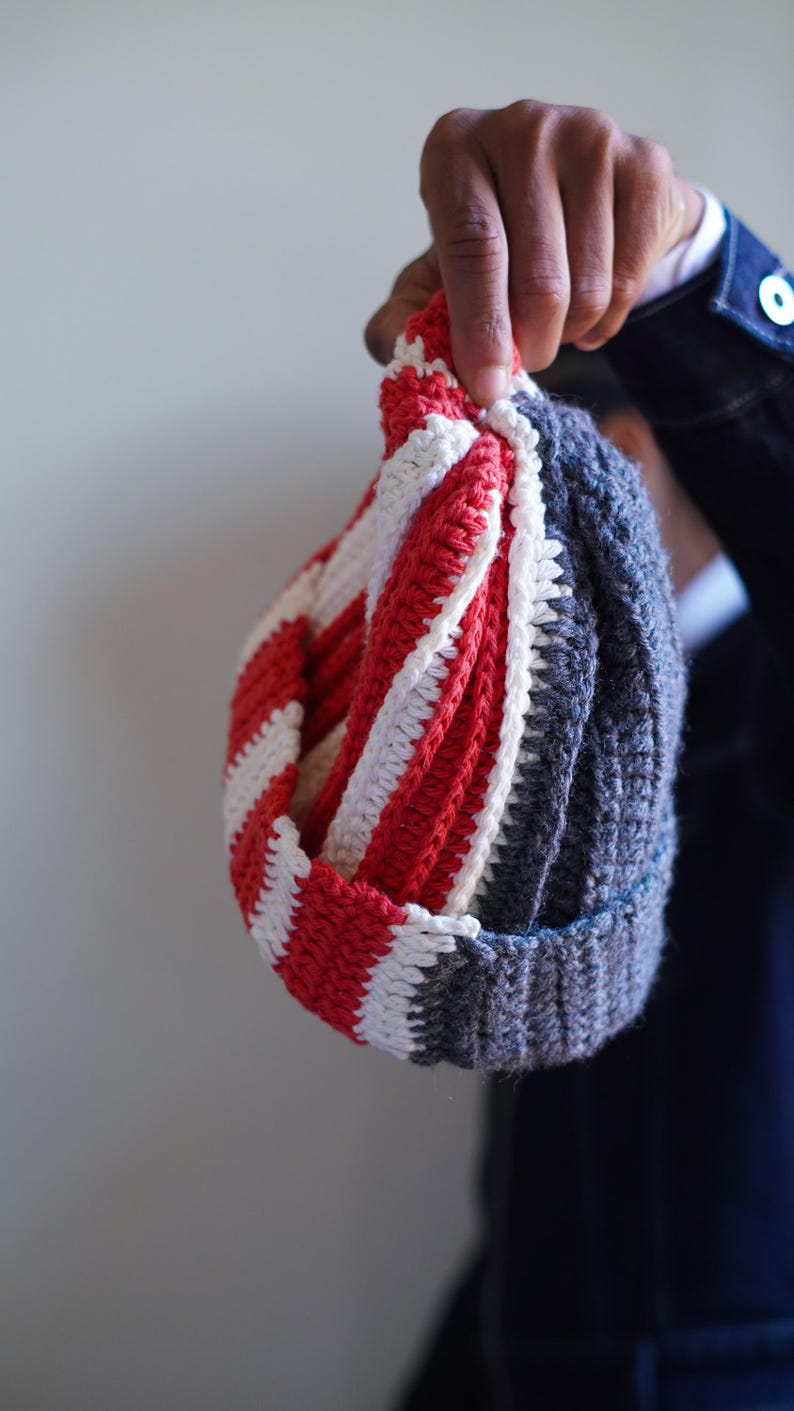
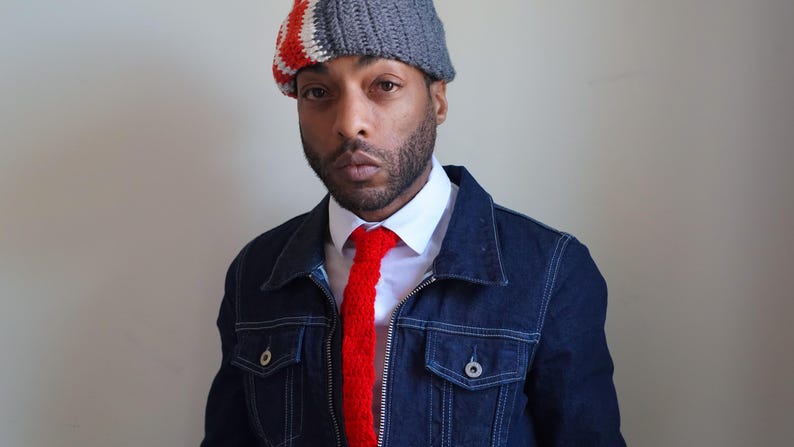
The collection in motion: hats, ties, denim, and the small gestures that make a finished piece part of a look. A short styling film from the product shoot.
Material study / Color, fiber & history
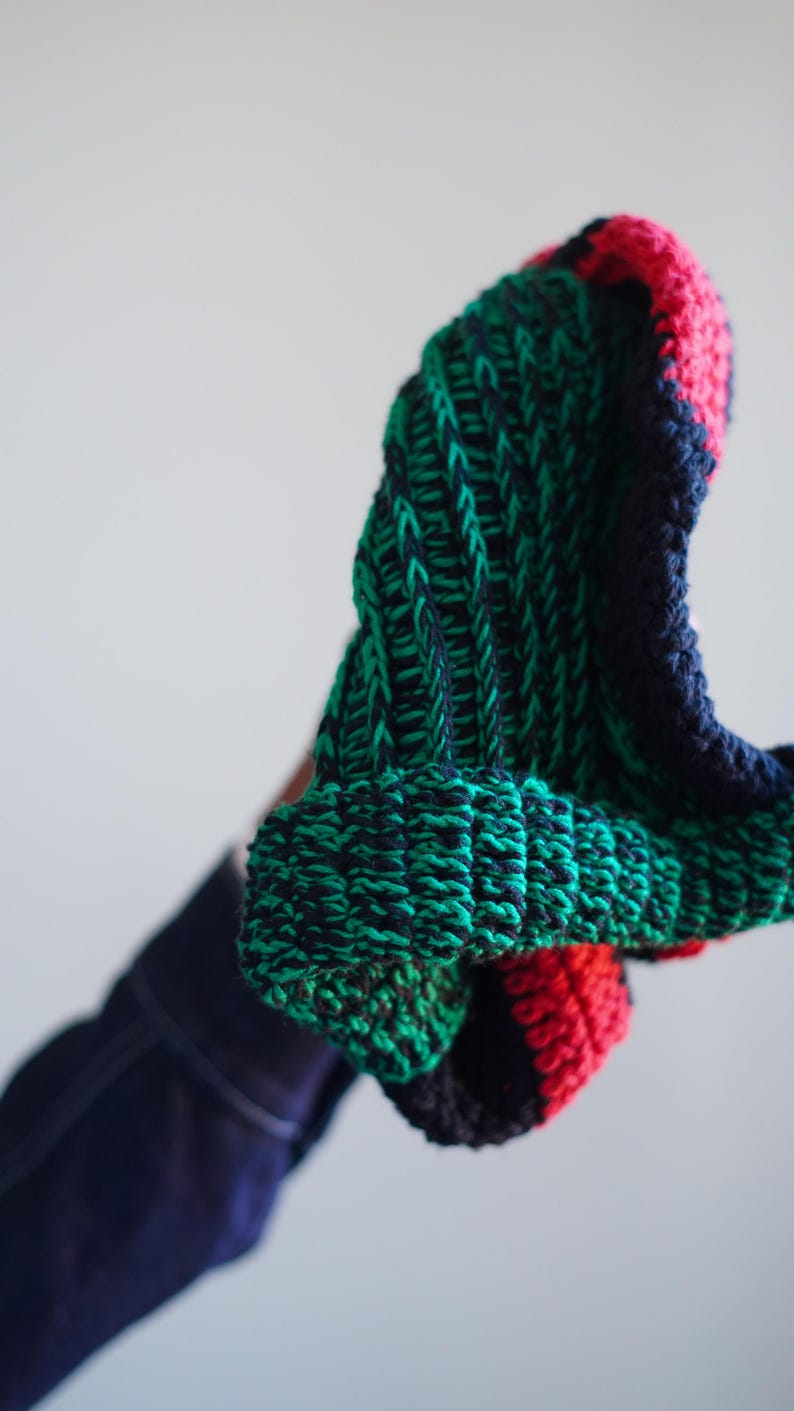
Red, black and green. Cotton and wool-blend ribbing. A familiar symbol reconsidered through the things we wear.

Artist David Hammons created African American Flag in 1990. The work combines the stars-and-stripes format of the United States flag with the red, black and green of the Pan-African flag associated with Marcus Garvey. It brings Black identity and American identity into the same frame.
The first version was made for Black USA, an exhibition at Museum Overholland in Amsterdam. The flag flew outdoors, across from the U.S. Consulate. Its meaning lives in that encounter between a recognizable national symbol and a different set of colors.
The Studio Museum in Harlem identifies the flag on its façade as Hammons’s Untitled (2004). First raised there in 2004, it has become an emblem of the institution. It is a related work with its own title and date, rather than the same object as the 1990 edition.
You can also explore the 1990 work through MoMA’s collection and the Smithsonian National Museum of African American History and Culture’s online Searchable Museum. MoMA currently lists its canvas-and-grommets version as not on view; check museum information before planning a visit.

Cotton is an everyday fiber with a consequential place in American history. In the nineteenth century, enslaved African Americans’ labor underpinned cotton production in the South, while cotton also supplied Northern textile mills and international trade. That history belongs to the material’s story.
Here, cotton sits beside wool-blend yarn in an object made by hand and chosen to be worn. The connection is a reason to look more closely at a familiar fiber: its texture, its usefulness, and the people whose work shaped its place in the country.
Byron Linnell Edwards’s independent interpretation translates the flag’s color language into a ribbed hat. Lily Sugar’n Cream cotton yarn meets Lion Brand Wool-Ease, a wool/acrylic blend. The finished piece contains cotton, wool and acrylic.
African American Flag Hat · $200. Made to order within one week, plus transit. U.S. shipping included. Approximate adult fit: 22 inches. This is not an official museum product or a collaboration with David Hammons.
Shop the flag hat ↗NMAAHC: David Hammons’s African-American Flag
MoMA: African American Flag, 1990
Studio Museum: the return of Untitled
National Park Service: Cotton Economy
Styling notes / Cotton flowers
Five cotton flowers. An existing shirt, cardigan or jacket. A new way to finish what you already wear.

A button can do more than close a shirt. These hand-crocheted flowers slip over an existing button, bringing a small piece of color and texture to an otherwise familiar garment.
Wear one at the collar, repeat the colors down a shirt, or add a flower to a jacket button. The garment stays yours; the detail changes.
$40 for five cotton button covers. Choose five solid colors, including repeats, or the Crayon pack: red, blue, yellow, green and white. Requested shades are confirmed before making.

Made to order within one week, plus transit. U.S. shipping included. Five covers only; garments and buttons pictured are styling examples. Button size and garment thickness affect fit. Send a photo and button diameter if you would like help before ordering.
Remove the covers before laundering the garment. Hand wash separately in cool water, reshape and dry flat.
Choose your five ↗Latest film / November 2026
A birthday week, finished pieces, new projects, and an honest check-in.
This week began with my birthday. The crochet came along with everything else: pieces to show, projects still taking shape, and a few things to work through.
In this week’s vlog, I catch up on how I celebrated, what I’ve been making, and where my head has been. Some things are finished. Other things can wait for another row.
Bring whatever is on your hook and spend a little time with me.
Watch the full film ↗From the live / Crochet with Byron
The replay. Your project. A little company while you make.
Bring your current project and settle in. This replay is an afternoon of crochet, yarn and conversation, with a few things from my handmade wardrobe along the way.
I show the granny-square cardigan, the hats that grew out of it, and the coordinating cardigan I made for Chucky. One project has a way of becoming another.
Watch the full replay while you make a little progress of your own.
Watch the full replay ↗From the live / Crochet with Byron
The replay. Your project. A little company while you make.
An afternoon of crochet and conversation about mental health, making time for yourself, and the life around a project.
This is a place to bring whatever you are working on, sit for a while, and make something alongside me.
Watch the full live replay here. Come back whenever you need a little company while you crochet.
Watch the full replay ↗